

You might not have heard of Wilhelm Friedrich Hegel, but his theories about history changed the world. He believed that human history is the gradual development of increasing human freedom through what he called the dialectical process. In that process, each historical era has dominant ideas about how society should be organized. However, those ideas always hit their limits (due to internal contradictions) and eventually fail. This causes the era to end and a new one to begin, with new ideas. With each new era, we build better institutions that are more rational and ethical, and this leads to the increase of freedom and human flourishing over time.
While Hegel’s original ideas were based on the belief that there was a spiritual process at work (he was a Christian), they were adopted and modified by atheists such as Karl Marx (his version was called dialectical materialism) to claim that human history follows a particular path, one that inevitably leads to equality and utopia. When someone says that you are on the “wrong side of history”, this is the idea they are referring to, whether they realize it or not.
For anyone born after World War 2, the idea that freedom increases over time seemed obvious. In the 80 years since the war, we saw the decolonization of Africa and Asia, the civil rights movement, the rise of feminism, the gay rights movement, and the acceptance of multiculturalism. The world became a radically different place in a relatively short period of time.
What the post-war generations didn’t see was that we were in a specific historical era, and that many of our ideas about freedom were contingent on that era. As these ideas began to hit their limits, the contradictions started to become obstacles - and that led to the rapid rise of populism on the right and “woke” politics on the left.
It is not that the ideas themselves were wrong - they were just limited, as all ideas are. I believe that what we saw as absolute truths in our era will, in the next era, be seen as partial truths. These ideas will not be rejected - they will be expanded and supplemented so that they are logical again.
Examples of Post-war Ideas of Freedom and Their Contradictions
Anti-colonialism
Belief: All nations should have self-determination.
Contradiction: Several nations are worse off now than they were under colonialism.
Racial Equality
Belief: Group differences are caused by social factors.
Contradiction: Group differences have not been eliminated by social policies; major inequities remain.
Multiculturalism
Belief: Diversity is a strength.
Contradiction: Cultural differences have put the safety of women and girls at risk in many European nations.
Open Immigration
Belief: Immigration is an economic benefit.
Contradiction: Housing costs have greatly increased while wages have stagnated. Demographic change is causing major social issues.
Gender Equality
Belief: Women should be liberated from traditional gender roles.
Contradiction: Happiness of young women is at an all-time low.
Gay Rights
Belief: LGBTQ people should have the same right to live their lives as everyone else.
Contradiction: Trans activism led to an explosion of children believing they were born in the “wrong body.”
Trust in Science
Belief: We should trust science over tradition or religion.
Contradiction: Science is facing a “replication crisis”, and there have been serious instances of scientists deceiving the public.
Individualism
Belief: Membership in any group (family/community/identity) must be voluntary.
Contradiction: There is now a loneliness epidemic, and social atomization (individuals isolated and disconnected from each other) is a significant problem.
Free Trade
Belief: Free trade increases global wealth for everyone.
Contradiction: Entire industries have been destroyed, leading to job losses and widespread substance abuse/drug addiction.
Criminal Reform
Belief: Society should respect the rights of criminals and try to reform them instead of punishing them. We should try to find the “root causes” of crime and eliminate them.
Contradiction: Mentally ill criminals are routinely killing random people after being released from prison.
An interesting observation about our modern political divide is that it seems to be largely between people who think that these ideas have failed because they were based on false assumptions versus those that think they failed because we did not go far enough to advance them.
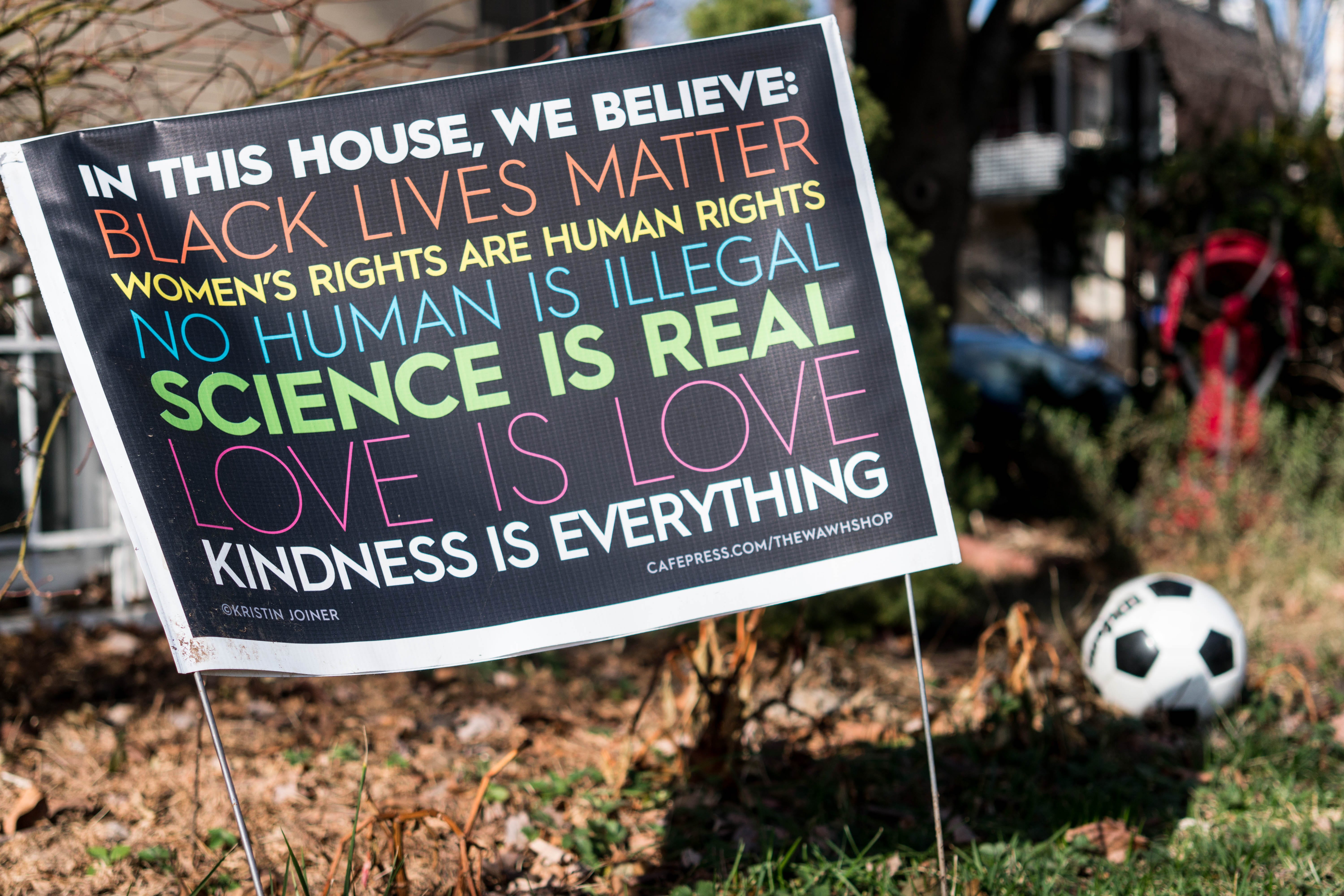
I think that all of the ideas listed above make sense on their own and without any context. But in our era, we have tested these ideas, and we are running into their inherent limitations. Some of that is due to the limits of social engineering to change human nature, some because of institutional failures, and some because we had assumed things about the way the world works that simply aren’t true.
Hegel had another important insight that can help us understand our current situation: you can only understand a historical era you were living in when it is coming to an end. His most famous quote is, “The owl of Minerva spreads its wings only with the falling of the dusk.” (The owl of Minerva is a classical symbol of wisdom.) What this means in modern terms is that wisdom only comes at the end of an era. While we may have differing narratives of the era we are living in while it is happening, it is only when that era is coming to an end (or over) that we can truly understand what the situation actually was.
Consider the fall of the Soviet Union. In the early 1980s, few people seriously considered the possibility that communism in Europe would suddenly collapse. But our ideas about it were wrong. Once the Berlin Wall went down in 1989, we suddenly had a new understanding of the true situation. Now we knew that the collapse was possible. As the era began to end, we finally saw it for what it truly was - what it always had been. Two years after the wall fell, it was all over. The truth was always there, but we could not see it until dusk.
The last few years feel very much like what we witnessed at the end of the Soviet Union. Every few days, I read a new essay or watch a YouTube video that is essentially a postmortem of our modern era, an era now commonly being referred to as “the post-war consensus” (other terms are “The Age of Hitler” and “The Long 20th Century”). Until recently, we never saw our era as a post-war consensus - we saw it as the inevitable growth of freedom. The recognition that there even was such a thing as a post-war consensus is itself a sign that the era is ending, especially since we have now given it a name.
What is happening is that we are beginning to see the era as it always was: guided by a collection of moral and political beliefs that became popular in the aftermath of the global disaster known as World War 2. Beliefs that were embraced and championed by the educated elites in order to rebuild the world and make sure that type of event never happened again. They were well-intentioned beliefs, but limited in their rationality.
We are also seeing more self-awareness that the story of WW2 became a sort of new religion for the West - an almost negative vision of Christianity. While Christ teaches us what we should do, Hitler taught what we shouldn’t do, and we based our society on that.
Alec Ryrie on why Christianity declined after the war:
So if we ask why Christianity went into retreat in the West from the early 1960s on, there is a simple answer: Christianity’s one crucial and virtually uncontested function in Western societies had suddenly failed. Whatever else Christianity had become by then, it was still our store of value. Believers and unbelievers alike accepted the authority of Jesus’s ethics as reflexively as we accept the notion of human rights now. But once a new set of values was in place—once a new lodestone had reset our moral compass, so that what had pointed towards Jesus now pointed away from Hitler—the adjustment of our coordinates made the old maps redundant. And so they were abandoned, or simply and quietly fell out of use.
Tom Holland comes to a similar conclusion:
Who indeed needs Jesus? It is no coincidence, perhaps, that the more Nazism has come to shadow the imaginings of people in the West, the less they have gone to church. Other regimes in European history have aspired, as Hitler did, to eradicate the hold of Christianity; but only Hitler aimed to eradicate, not just the institutional forms of the religion, but the doctrines of charity for the weak and sick, and the universalism, that lay at the heart of its traditional teachings.
This is why, 80 years on from the Second World War, the Führer retains his starring role in contemporary demonology. Communist dictators may have been no less murderous than fascist ones; but they — because communism was the expression of a concern for the oppressed masses — rarely seem as diabolical. Today, when we ask ourselves “what would Hitler have done?”, and do the opposite, we are as obedient to the weathering effects of Christian morality as our forebears were when they wondered “what would Jesus have done,” and sought to do the same.
It seems that what happened is that at some point after the war, we transformed from a society where our moral foundation was a clear description of what our goals and obligations should be, to a society where our moral foundation became a description of things that we shouldn’t do. The post-war ideas about freedom seem to be a clear disavowal of those things we find evil, and not an avowal of things we find good. We went from a society of duty to a society of rights. A society of action to a society of negation. N.S. Lyons describes it:
The spirit of the Long Twentieth could not be more different from that which preceded it. In the wake of the horrors inflicted by WWII, the leadership classes of America and Europe understandably made “never again” the core of their ideational universe. They collectively resolved that fascism, war, and genocide must never again be allowed to threaten humanity. But this resolution, as reasonable and well-meaning as it seemed at the time, soon became an all-consuming obsession with negation.
It is clearly stated in the UN Declaration of Human Rights that human rights have now become our highest aspiration:
Whereas disregard and contempt for human rights have resulted in barbarous acts which have outraged the conscience of mankind, and the advent of a world in which human beings shall enjoy freedom of speech and belief and freedom from fear and want has been proclaimed as the highest aspiration of the common people…
This explains the concern from many people about the rise of populism - they associate it with something Hitler would have supported, and they think it means the loss of freedom. I personally see the rise in both rightwing and leftwing extremism as a reaction to the inevitable limitations of our modern ideas, and I believe they are just temporary. Once we have new ideas, the reactionary politics will no longer be necessary. We are not returning to either fascism or communism - those ideas are dead.
For those who grew up thinking our modern ideas about freedom were eternal, there is great frustration and the urge to blame individual politicians for the change. However, figures like Donald Trump are not the cause of our problems. He happened to be the right person at the right time to rebel against a failing system, but he was not the cause of anything. As Henry Kissinger said:
Trump may be one of those figures in history who appears from time to time to mark the end of an era and to force it to give up its old pretenses.
If Trump had never been elected, the process would likely have been the same - the change was inevitable because of the contradictions inherent in our ideas. The next stage of history will be new, more rational ideas about human freedom and not the elimination of freedom as many people fear.