A while ago I learned how to predict the future. This wasn’t the result of some government experiment gone wrong or a visit from space aliens, but rather that I figured out something. I determined that many of the popular beliefs held by highly educated people are based on false assumptions, and that policies based on those false assumptions are guaranteed to fail. Predicting the future of major policy failures is simply a matter of figuring out what those false assumptions are.
We live in a pluralistic society with different views of right and wrong and with different ideas about human rights and justice. What I noticed is that when a study gives empirical validity to a moral conviction, the claims of that study quickly become popular in academia and the press. I assume this is because it much easier to argue about facts than about moral beliefs. Arguments over facts can be resolved, but arguments over morality tend to go nowhere. For example, say that Bob has a moral conviction that immigration is a natural human right. If a study is released which claims that immigration greatly improves societies and Bob is aware of it, then he will use that study to argue for more immigration instead of trying to justify his moral conviction. Or, say that Linda believes that racism is abhorrent. If she is aware of a study claiming that race is a social construct, she will likely use that to claim that racism is illogical rather than claim it is immoral. That creates an incentive to generate and promote research that supports the moral intuitions of the educated elite. It also creates a feedback loop, where these people are told their moral intuitions are actually empirically true and that people who don’t share their intuitions are just uneducated or ignorant.
This isn’t to say that just because an empirical claim supports a certain moral conviction that is automatically suspect. The problem lies in the fact that much of this research has been of poor quality and that we are now in the midst of replication crisis, and the majority of these studies cannot be replicated. Many core findings in psychology and other fields are now in doubt, which I theorize is what you would expect to see when weak or questionable findings are artificially boosted to support moral convictions. I believe this is the root cause of these false assumptions. I also believe that the policy failures based on these false assumptions is the cause of many of our current social and political issues.
Justifying moral beliefs using empirical research also creates two unique problems. First, if the empirical claim is disproven, it leaves the moral belief at risk. To quote John Turner, “To say that racial discrimination is wrong because there is no genetic difference is to invite the counter-proposition that racial discrimination is right because there is a genetic difference.” The second issue is that when empirical claims become “load bearing” to moral convictions, they become essentially unfalsifiable as those doubting the empirical claims are accused of attacking the moral belief itself. This causes the normal scientific process of self-correction to slow to a crawl.
Immigration as an example
I could tell that mass immigration was going to be huge problem when the experiences of real people started to radically differ from the optimistic theories that were popular in the academia and the press. (Note: I am specifically talking about the phenomena of mass migration from the developing world into the West, which slowly started in the 1960s due to changes in immigration law and rapidly increased in the late 1990s). Around 2012, when I started hearing stories about wide-scale sexual assaults in Europe, particularly the grooming gangs in the UK, I knew something had gone terribly wrong. These stories were horrible beyond belief, and if only a fraction of them were true, it was a disaster. Also, having grown up in Southern California during a wave of immigration, what I witnessed was increased housing prices, stagnating wages and lower quality of life. All I was hearing from academia and the press was that mass migration was making us stronger and more prosperous, but from what I and thousands of other people experienced, the opposite was true. I began to suspect that the academic theories around immigration were doing the work of justifying certain moral beliefs rather than accurately describing reality.
The proof of a theory is whether it can be used to make accurate predictions. In this case, was my theory in 2012 that mass migration was going to be a huge problem accurate? A few years later the Cologne Germany new year gang assaults on women shocked the world, then Brexit happened , then the first election of Trump, then the Charlottesville riot, then the rise of populist right parties in Europe, then the New Zealand mosque shooting, then the wide-scale censorship of social media in 2016, then the border surge under Biden, then the second election of Trump, then Elon Musk and others taking hardline stance against immigration, then the discovery of massive Somali fraud in Minnesota, then the ICE crackdowns, then the protests against the ICE crackdowns and now this week the question of birthright citizenship is going to the Supreme Court. Whatever your opinions on these events might be, you have to admit that my prediction that immigration would be a huge problem was accurate.
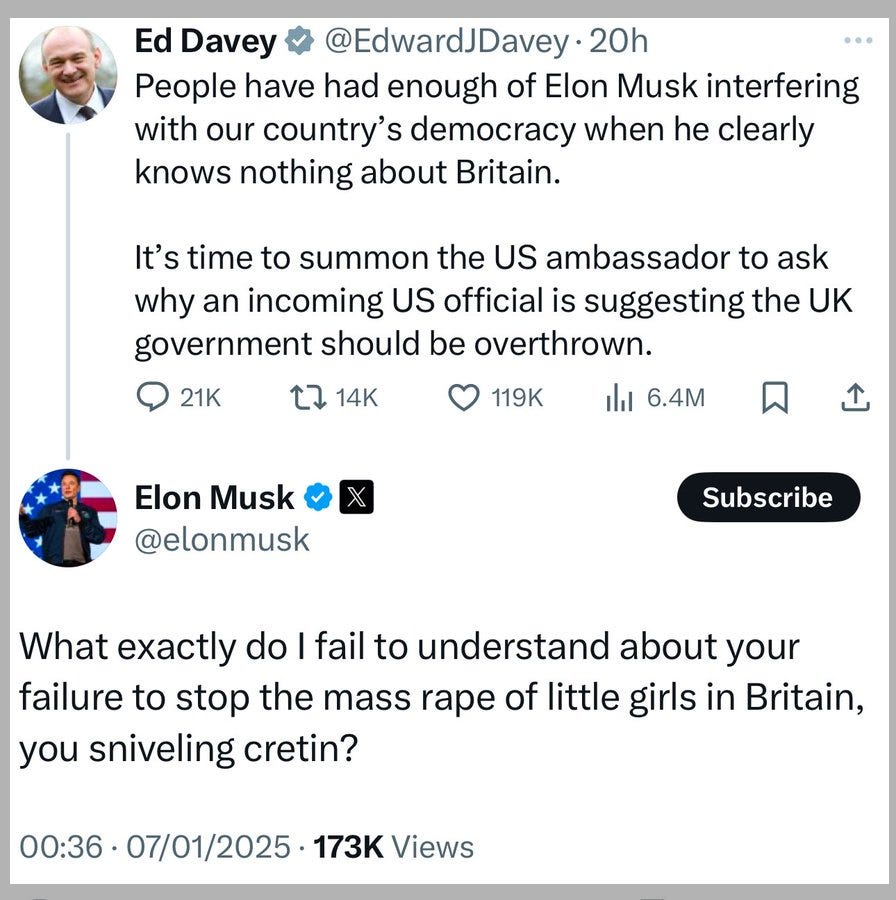
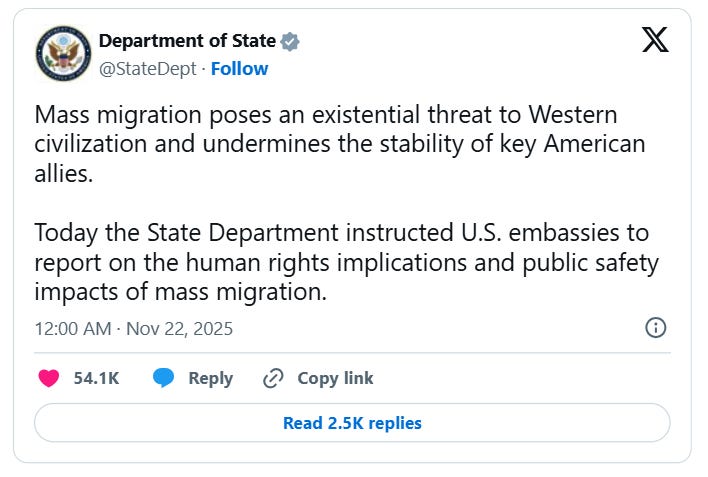
When the stories I heard about the sexual assaults were verified as accurate, when studies started coming out showing the true cost of immigration, and when speech restrictions over discussing immigration in places like the UK started to become more drastic I knew that the social scientists had seriously misled the public and that we are in deep trouble. I agree with those that claim that mass immigration is now an existential threat to our civilization.
Red Flags
If I am correct that empirical claims of scientists (mostly social scientists) became a way to justify certain moral beliefs, and if you want to locate false assumptions, first look for the popular empirical claims that actually just stand-ins for moral convictions. Next, check if the empirical claims match what normal people experience on a daily basis. If they don’t then you likely have a false assumption. There are also some red flags that I have noticed:
The research has not been verified outside the lab: Stereotype threat, implicit bias testing and ego depletion were based on lab studies that failed to replicate.
The research was heavily promoted and turned into a business: Implicit bias training spawned a massive corporate training industry, Myers-Briggs personality testing created a multi-billion dollar industry, blue zones longevity theory was turned into a commercial franchise, the idea that trauma lodges in body tissues (The Body Keeps the Score) created an institutional self-help empire. All have fallen (or are falling) to the replication crisis.
The research was codified into a scientific consensus statement due to political pressure: Examples include the UNESCO statements on race released after WW2, the Harvard Lancet statement that COVID-19 had a natural origin, the AMA/CDC/DHHS/AAMC racial justice statements during the George Floyd protests, and the AAP/Endocrine Society/AMA endorsements of gender-affirming care for minors during the rise of trans activism.
The research was used to create laws and policies and became too dangerous to verify afterwards: Examples include the Clark doll experiments that were referenced in the Brown v. Board of Education decision and disparate impact theory which led to IQ and aptitude tests to be outlawed for employment screening in the United States.
Academics questioning the research are fired: Noah Carl, Bo Winegard, Nathan Cofnas, Bryan Pesta, Stephen Hsu, James Watson (the co-discoverer of DNA) and others were fired or forced to resign the last few years for disputing the consensus view on the cause of racial IQ gaps. Alessandro Strumia was dropped by CERN for questioning if science was biased against women. Charles Negy was fired from UCF for doubting the idea of white privilege.
Looking for moral beliefs smuggled into empirical claims, real world experiences that don’t match empirical claims and these red flags will help you figure out what research is questionable and what the popular false assumptions are. With a little practice, you too will be able to predict which policies are likely to fail in the future.
False Assumption Registry
To further test my theory about false assumptions, I built FARAgent, an AI agent that scans the web for false assumptions that led to policy failures and reports back on them at https://far-project.org. So far, the results have been better than I expected (a testament to the rapidly improving capabilities of AI). Please stop by and check it out when you have time and leave feedback (even if you hate it).